Newsletter Subscribe
Enter your email address below and subscribe to our newsletter

Frequently Asked Questions
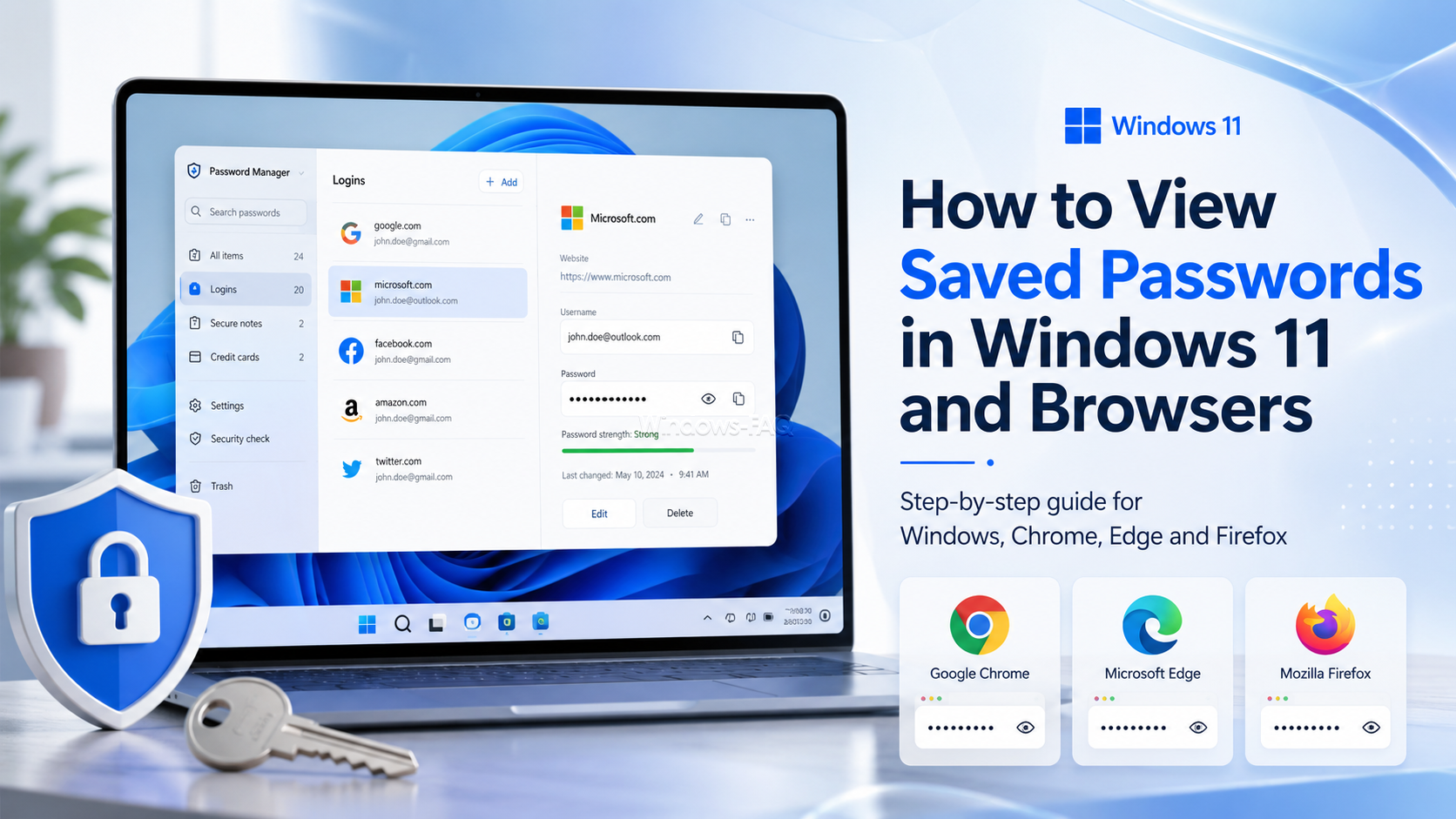
Forgot a website password or need to remove an old login? You can often view saved passwords on a Windows PC, but there is no single screen that contains every password stored on the device. Windows, Chrome, Microsoft Edge, Firefox, Android and iPhone each use their own password storage.
This guide shows you where to look, how to reveal a saved password and what to do when the login you need is missing. The Windows instructions apply to Windows 11 and Windows 10.
Quick answer: Open the password manager that originally saved the login. Use Windows Credential Manager for Windows, network and application credentials. Use Google Password Manager for Chrome, Microsoft Password Manager for Edge and the Firefox Passwords page for Firefox. Your device may ask for Windows Hello, a PIN, Face ID, Touch ID or another sign-in method before it reveals a password.
You can also read the original German version of this guide on Windows-FAQ.de.
Diesen Artikel auf Deutsch lesenSaved passwords are not collected in one universal Windows password list. The correct location depends on the program or device that saved the login.
| Type of saved login | Where to find it |
|---|---|
| Windows, network and application credentials | Windows Credential Manager |
| Passwords saved in Google Chrome | Google Password Manager |
| Passwords saved in Microsoft Edge | Microsoft Password Manager |
| Passwords saved in Mozilla Firefox | Firefox Passwords or about:logins |
| Passwords and passkeys on Android | Google Password Manager |
| Passwords and passkeys on iPhone or iPad | Apple Passwords app |
This separation explains why a login can appear in Chrome but not in Windows Credential Manager, or in one browser profile but not another.
Windows Credential Manager stores credentials used by Windows, connected applications, network shares and certain websites or services. It is useful when you need to check a stored username, remove an outdated network login or manage credentials for another computer, server or NAS device.
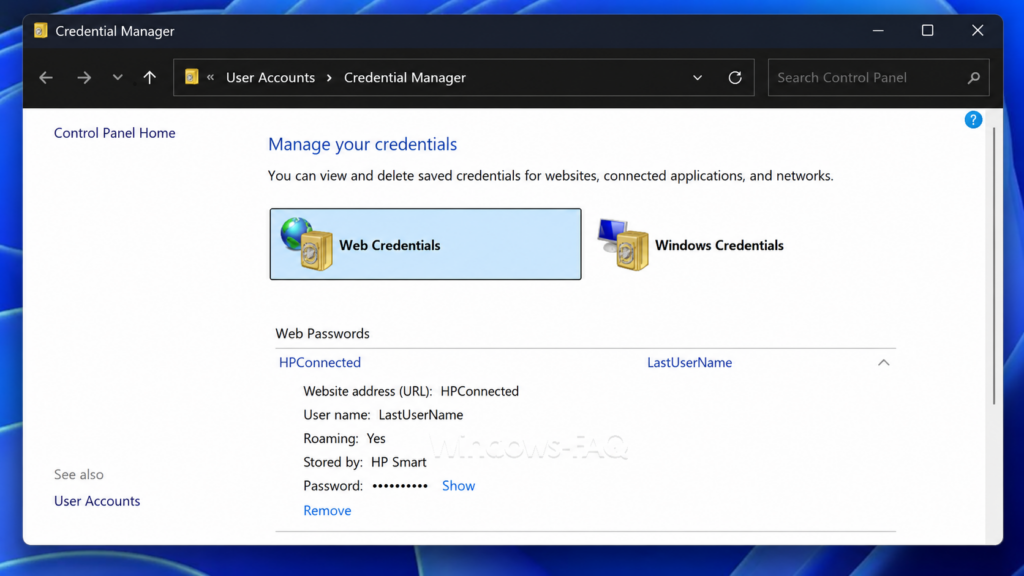
Credential Manager.Windows may then display the saved password in plain text. The Show option is not available for every credential type. Many entries under Windows Credentials let you edit or remove the login without revealing the stored password.
Modern browsers normally maintain their own protected password databases. A password saved in Chrome is therefore usually found in Google Password Manager, while an Edge password is found in Microsoft Password Manager. Do not assume that an empty Web Credentials list means your browser has no saved passwords.
No. Credential Manager does not reveal the password for your Windows user account, Microsoft account or local account. It also cannot display your Windows Hello PIN as a readable password.
If you have forgotten the password used to sign in to Windows, use the official account recovery or password reset process. A Windows Hello PIN is tied to the device and is not the same as the Microsoft account password.
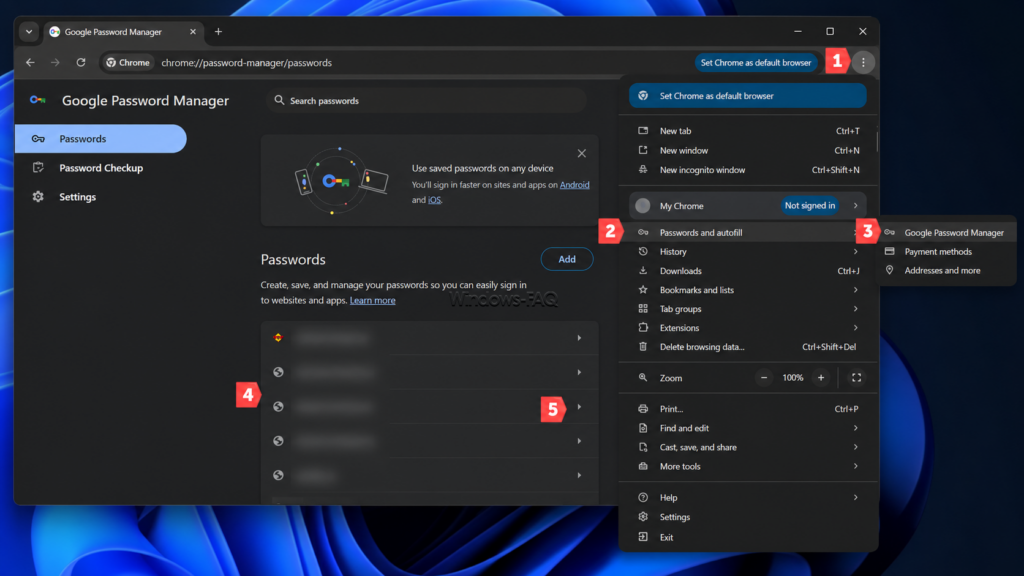
Chrome stores website credentials in Google Password Manager. Depending on your settings, the passwords may be connected to your Google Account or stored only on the current device.
After authentication, Chrome reveals the saved password. You can also copy, edit or delete the login from the same entry.
Passwords saved to your Google Account can also be managed at passwords.google.com. Sign in to the correct Google Account, select the website and authenticate again before revealing the password.
If the password appears in Chrome on one computer but not on another, check which Google Account and Chrome profile are active. A password saved only on the original device will not automatically appear elsewhere.
Changing the value in Google Password Manager updates only the copy remembered by Chrome. It does not change the actual password for the website.
To change the real password, sign in to the website, open its account or security settings and complete the password change there. Then update the saved Chrome entry when prompted.
Current versions of Edge use Microsoft Password Manager for passwords and passkeys saved with a personal Microsoft profile.
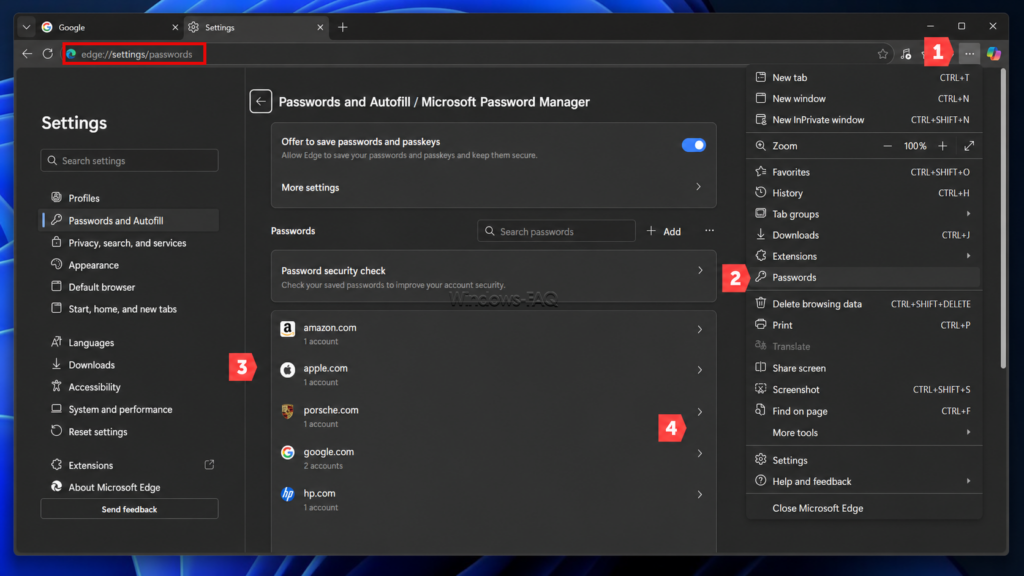
You can edit or delete the stored entry from the same page. As with Chrome, editing the saved entry does not change the password on the website itself.
First, make sure you are using the intended Edge profile. Microsoft Password Manager is designed for personal Microsoft account profiles. A work or school profile may have different options, and an IT administrator can restrict password features.
Edge menu names can also vary slightly between versions. Open Edge Settings and search for password if the path above does not match your screen.
Firefox includes its own password manager. The quickest route is the Passwords command in the Firefox menu.
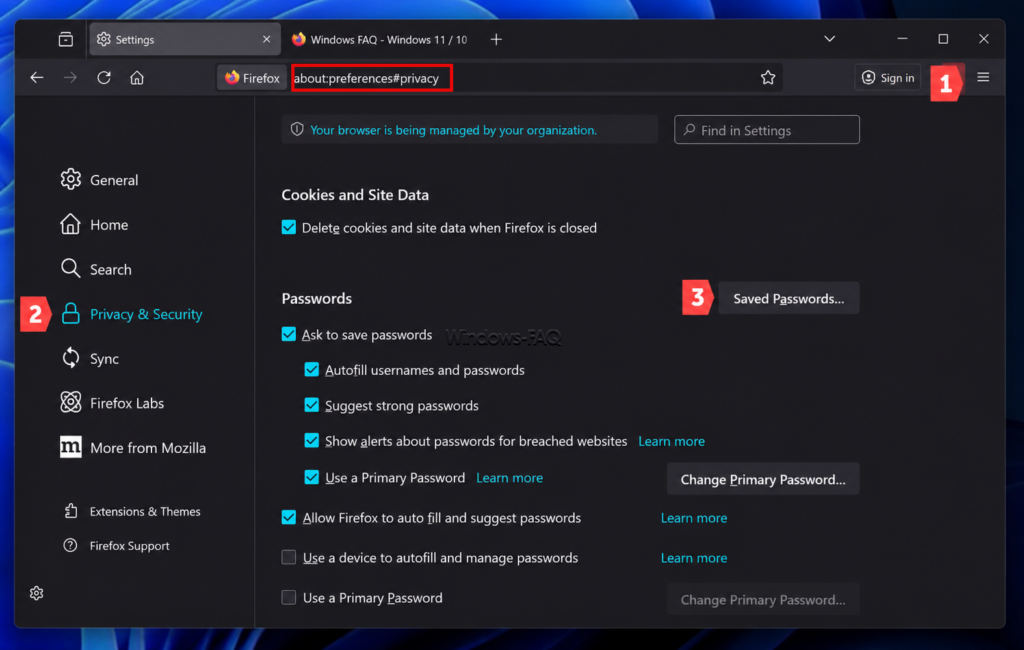
You can also enter about:logins in the Firefox address bar. The password manager lets you search, copy, edit and remove saved logins.
Firefox offers an optional Primary Password, previously called a Master Password. When it is enabled, Firefox asks for this password before it can access protected saved logins.
A Primary Password can be useful on a shared computer, but you must keep it safe. Resetting a forgotten Primary Password can remove the usernames and passwords protected by it.
Most Android phones and tablets use Google Password Manager for passwords and passkeys saved in Chrome and supported apps.
On some Android devices, you can also open the system Settings app and search for Password Manager. The exact menu location may differ between phone manufacturers.
On iOS 18 or later, Apple provides a dedicated Passwords app. It stores website passwords, app passwords, passkeys, verification codes and supported Wi-Fi credentials through iCloud Keychain.
On iOS 17 or earlier, open Settings, select Passwords and authenticate before choosing the required entry.
If a password is missing, check the Deleted or Recently Deleted area and confirm that iCloud Keychain is active on the correct Apple Account.
A missing password does not always mean it has been deleted. Work through the following checks before resetting the account password.
A Chrome login does not automatically appear in Firefox, Edge or Credential Manager. Open every browser and password manager that you regularly use.
Chrome, Edge and Firefox can maintain separate profiles. Each profile can have its own passwords, history, bookmarks and synchronization settings. Switch to the profile that was active when the login was saved.
Check the Google, Microsoft, Mozilla or Apple account connected to the password manager. This is especially important when you use separate personal and work accounts.
The login may exist only on another computer or phone. Check whether password synchronization is enabled and whether the original device is still available.
You may have declined the browser’s save prompt and selected an option that prevents future prompts. Review the password manager settings and remove the website from the list of sites that should never save passwords.
A passkey is not a hidden text password. It uses cryptographic credentials and device authentication. You can manage or delete the passkey entry, but there is no readable password to reveal.
Company policies can disable password saving, viewing, exporting or synchronization. Contact the responsible IT administrator when the device or browser profile is managed by your employer or school.
If no password manager contains the login, the browser cannot reconstruct it. Use the website’s Forgot password or account recovery option instead of installing an unknown password recovery tool.
A saved password is a secret text value that the browser can reveal after authentication. A passkey consists of cryptographic credentials and is unlocked with a trusted device, PIN, fingerprint or facial recognition.
Windows 11 lets you view and delete passkeys stored locally under Settings, Accounts and Passkeys. You can see the service and account associated with the passkey, but Windows does not display a secret passkey value in plain text.
If you remove a passkey, make sure another sign-in or recovery method is available before you delete it.
Saving passwords can be safer than reusing the same weak password across several websites. The password manager is still only as secure as the device and account protecting it.
Chrome, Edge and Firefox can export saved credentials to a CSV file. A CSV export is normally readable as plain text. Anyone who can open the file may be able to see every exported username and password.
Use password export only when you need to migrate the data. Store the file temporarily in a protected location, import it into the trusted destination and securely delete the CSV afterward.
No. Windows Credential Manager, Chrome, Edge, Firefox and third-party password managers use separate stores. You must open the program that originally saved the login.
No. Windows does not provide a built-in function that reveals the current Microsoft account or local account password. Use account recovery or reset the password if you have forgotten it.
The PIN or Windows Hello prompt confirms that the person using the browser can authenticate to the device. This helps prevent someone with brief access to an unlocked browser from immediately reading saved passwords.
Chrome normally stores its credentials in Google Password Manager, not in the main Windows Credential Manager list. Open Chrome, select Passwords and autofill and then Google Password Manager.
No. Deleting a browser entry removes only the stored login. The account on the website continues to exist.
No. It only changes the value remembered by the browser. Change the real password on the website first, then update the saved entry.
You may find it in Chrome, Edge, Firefox or another password manager if you previously saved the web login there. The Outlook desktop app does not normally provide a button that reveals the account password. Reset the password when no saved copy is available.
Windows does not include a legitimate built-in view-all function for revealing every user’s passwords. Administrators can manage policies and remove certain credentials, but protected browser and account passwords are not presented as one readable master list.
Change a password when it is weak, reused, exposed, suspected of compromise or required after an account security incident. Routine changes without a security reason can encourage predictable password variations.
You can view saved passwords only from the password manager that stored them. Use Credential Manager for Windows, network and application credentials. Open Google Password Manager for Chrome, Microsoft Password Manager for Edge and the Passwords page for Firefox.
Android and Apple devices provide their own password managers, while passkeys are managed differently because they are not readable text passwords. If the login is not present in any manager, use the website’s official account recovery process.
After finding the password, review whether it is unique and secure. Replace reused or compromised credentials, enable multi-factor authentication or a passkey and keep exported password files away from untrusted locations.